Merge Ragdoll Fighting
- 4.6
- Rating
- 10.00M
- Installs
- Free
- Price

 Analysis by App-foxy
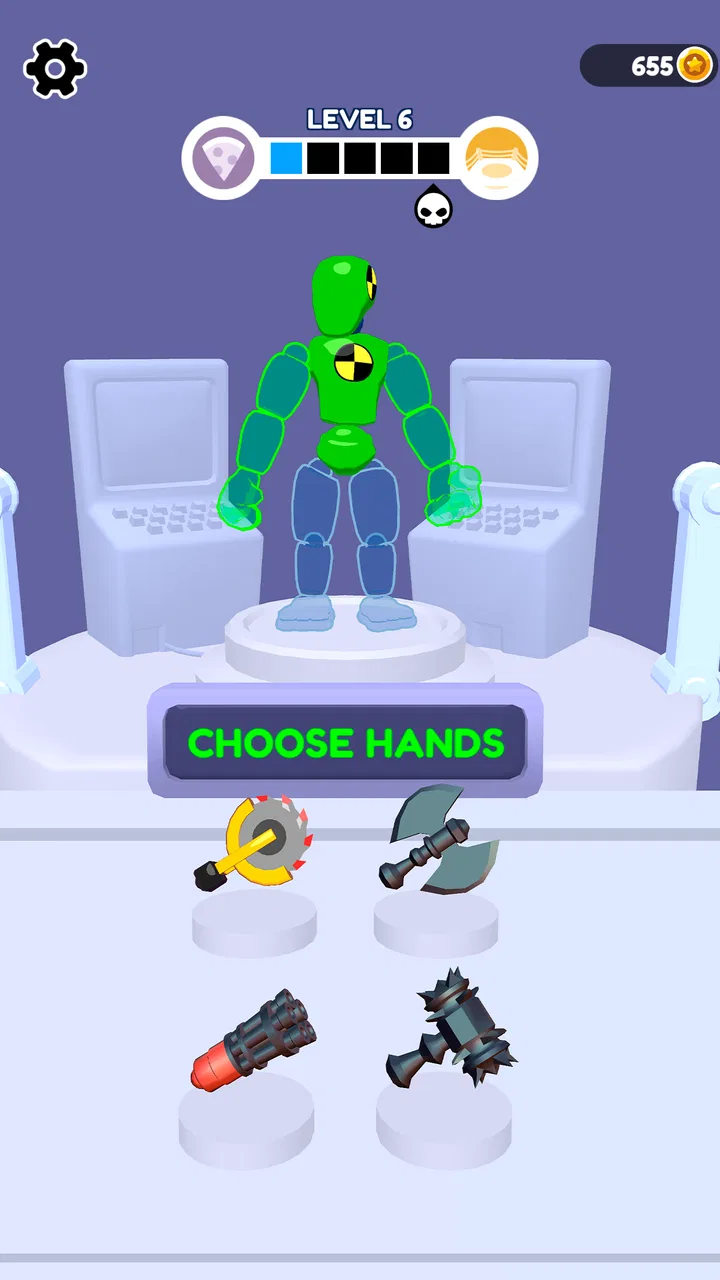
I spent time with Merge Ragdoll Fighting to see whether its monster-mixing idea has enough depth to hold attention beyond the first few battles. It is a free arcade game from CASUAL AZUR GAMES, built around combining creature DNA and sending the resulting mutant into ragdoll-style fights. The concept is immediately understandable, but the more important question is whether the merging feels like meaningful planning or simply a quick way to reach the next match.
My first impression was positive because the game gets to its central action quickly. There is no need to learn a complicated control scheme before seeing what the game is about. You create a fighter, make decisions about its genetic combination, and watch the result enter a loose, physical-looking battle. That makes it easy to pick up during a short break, especially if you enjoy arcade games that turn a simple rule into a succession of surprising outcomes.
How the mutant-fighting loop feels in practice
The appeal comes from the contrast between preparation and chaos. Before a fight, the interesting moment is deciding how to combine different monster traits. Once the battle begins, the ragdoll presentation adds an unpredictable layer: attacks and movement do not feel as rigid as in a traditional button-heavy fighting game. I found that combination entertaining because the result is not only about choosing a creature; it is also about seeing how that choice behaves when the fight starts.
You May Also Like

 Blood Strike: 2.5 Anniversary
Blood Strike’s Loadouts Turn Every Drop Into a Tactical Gamble
A close look at Blood Strike’s custom loadouts: how fast access to signature weapons reshapes its battle royale rhythm, rewards preparation, and narrows the gap between fights.

 Pandora - Music & Podcasts
Pandora’s Music Is Easy to Start, but Harder to Recover
Pandora’s strength is its low-effort path from a seed to a station. Its weak spot is how much confidence it asks you to place in connection, setup, and quiet recovery.

 8 Ball Pool
 Is Built on Rivalries, Rematches, and Routine
A close look at the rivalries, rematches, shared routines, and unanswered safety questions that turn a quick pool match into a persistent mobile community.

 Samsung Music
’s Quiet Strength Is Playing What You Already Own
Its reach comes less from spectacle than from dependable access to a personal library. That simplicity is both the app’s strongest retention engine and its ceiling.

 AccuWeather: Weather Radar
AccuWeather Review: A Quick, Clear Forecast for Everyday Decisions
For everyday plans, the best forecast is the one you can understand quickly. AccuWeather makes rain timing, radar, and local conditions easy to act on, with a few trade-offs.

 Hill Climb Racing
Why Hill Climb Racing Still Turns Crashes Into One More Run
A tiny car, a bumpy hill and one more upgrade: Hill Climb Racing keeps resurfacing because its simple chaos makes every near-miss feel personal.
More From Our News Desk



That structure makes the game more approachable than a conventional fighting title. You are not expected to memorize long move strings or study a large control layout. Instead, the satisfaction comes from recognizing which mutant setup seems promising, then learning from the next encounter. For someone who wants a fast arcade experience rather than a serious competitive fighter, that is a sensible design direction.
The merging mechanic is also more interesting when treated as a small experiment rather than a button you press automatically. I recommend paying attention to what changes after each combination instead of rushing through every available merge. Even when the game is moving quickly, comparing the outcome of one creature mix with another can make the process feel more deliberate.
A useful everyday scenario is a ten-minute wait at a bus stop. This is where the game fits best for me: I can open it, make a few decisions, watch a handful of fights, and stop without needing a long uninterrupted session. It also works when I want something more active than a puzzle but less demanding than a full action game. The bright mutant theme and loose combat style make it easy to understand even when I am not giving it my complete attention.
Why the ragdoll style matters
The physical comedy is not just decoration. It changes the tone of the fights. A conventional arcade fighter usually makes every hit feel precise and intentional, while ragdoll combat creates moments that look messy and occasionally surprising. That can make a victory feel amusing rather than purely skillful, and it helps the game stand apart from basic merge titles where the result is only a larger number or a stronger unit.
At the same time, players who want exact control may find this style frustrating. If you prefer to know that every outcome came directly from a carefully timed input, the loose movement may feel less satisfying. I see the game as a casual spectacle with decision-making, not as a replacement for a technical fighting game. That distinction is important before downloading it.
Progression without turning every decision into spending
The game is free to download, which lowers the barrier to trying it. It has in-app purchases priced at $11.99 per item, so spending is part of the product context and should be considered before committing to long-term play. I would not treat the presence of purchases as proof that the game is unfair, but I also would not ignore them when deciding how comfortable the experience feels.
My advice is to play naturally for a while before buying anything. The core question is whether the merging and fighting loop remains enjoyable when you are simply experimenting, rather than whether a purchase can make progress faster. If you already know that you tend to spend impulsively when a game presents a difficult encounter or a tempting upgrade, setting a personal limit before playing is a practical safeguard.
The purchase price is substantial enough that I would want a clear reason before paying for an item. A useful reason might be that the game has become a regular short-session habit and the purchase improves that experience in a way I genuinely value. A weak reason would be buying immediately because a battle did not go your way. In a game built around trying different mutant combinations, losing can be part of the learning process rather than a sign that spending is required.
There is also a psychological trade-off in merge-based progression. The next combination can feel just close enough to encourage another round, and the promise of a stronger fighter can make it easy to keep playing beyond the point where the game is still fresh. I found it better to set a stopping point before opening the game. That keeps the arcade loop enjoyable and makes it easier to judge the game on its actual entertainment value instead of on the urge to unlock one more result.
What progress rewards, and where it can feel repetitive
The strongest reason to continue is curiosity. Each new combination suggests another possible fighter, and the combat gives that experiment an immediate payoff. I enjoyed asking whether a different DNA mix would change the feel of the next encounter. This is a more engaging motivation than simply watching a progress bar rise.
The weaker side is that the same basic rhythm can become familiar: prepare a mutant, enter a fight, observe the outcome, and repeat. If the novelty of the combinations stops carrying the experience, the battles may begin to feel like short variations on one formula. That is why I would recommend the game more strongly to players who enjoy tinkering and visual surprises than to players who need a deep campaign, complex story, or highly varied mission structure.
One practical tip is to avoid judging a new combination only by whether it wins immediately. Watch how it performs across several encounters and notice whether the result feels consistently useful or merely lucky. This approach makes the merging system feel more like testing a build and less like repeatedly pulling a lever. It also helps separate a genuinely enjoyable discovery from a one-off funny result.
Fairness and the competitive question
The game’s presentation suggests a fight-focused arcade experience, but I would be careful about treating it like an esports-style competition. The ragdoll format naturally introduces unpredictability, and that means a match may be entertaining without being a perfect measure of player skill. I enjoyed the uncertainty, but I would not choose this title if my main goal were precise, fully controlled competition.
Spending deserves the same careful distinction. The game offers purchases at $11.99 per item, yet that fact alone does not establish exactly how those purchases affect battles or progression. I will not pretend to know more than that. From a fairness perspective, the sensible approach is to play without spending first and observe whether the free experience feels satisfying on its own. If you are specifically looking for a level playing field where paid advantages are clearly separated from performance, you may prefer a game whose competitive rules and monetization are more explicit.
For casual play, the uncertainty matters less because the main reward is the spectacle of the mutant and the fight. For a player who compares every result closely or wants a strong ranked environment, it matters much more. In that situation, I would choose a traditional fighting game with transparent controls and clearly defined competitive systems instead of assuming this arcade title provides the same kind of fairness.
I also think the game is better suited to friendly, low-pressure play than to arguments about who is objectively the better fighter. A surprising ragdoll outcome can be funny precisely because it does not always feel perfectly predictable. That is a strength for entertainment and a limitation for serious competition.
Who should try it, and who should skip it
I would recommend it to players who like monster customization, quick arcade rounds, and the pleasure of seeing an unusual creation behave in a chaotic fight. It is especially approachable if you dislike complicated controls but still want a game with a decision before the action. The Teen content rating is worth noting for families making a choice, even though the overall premise is presented as playful monster combat.
It is also a good fit for people who enjoy short sessions. I can imagine playing it while waiting for food, taking a break from work, or looking for a quick distraction before bed. The game does not require the same commitment as a long role-playing adventure, and its central idea can be understood almost immediately.
I would skip it if you want a detailed story, long-form character development, or a fighting system where precise timing is the entire point. I would also be cautious if you dislike merge mechanics, because the combination process is not a side activity; it is central to the identity of the game. Players who become irritated by unpredictable physics may also prefer a more controlled arcade alternative.
Compared with a standard merge game, this one gives the results a more active payoff. You are not only combining objects to reach a higher tier; you are sending the result into a fight. Compared with a standard fighting game, it sacrifices precision for accessibility and visual unpredictability. That middle position is the reason it feels distinctive, but it also means it may not fully satisfy fans of either extreme.
Device expectations and practical details
The game supports Android devices running version 7.0 or later, which makes it accessible to many older phones and tablets. Even so, compatibility is not the same as identical performance on every device. If your phone is older or has limited free storage and memory, I would close other demanding apps before playing and avoid judging the game from a single busy session.
The current version is 0.0.61, and that version label is useful context for anyone who expects a completely finished, unchanging experience. I would approach it as an actively presented arcade game rather than as a large, fixed console-style release. Keeping the app updated is sensible, particularly if you encounter a rough edge, because later versions can affect how smoothly a game behaves.
Its popularity is clear: it has passed 10 million installs, carries a 4.6 average rating from around 14 thousand ratings, and has about 560 written reviews. Those figures suggest broad interest, but they do not replace personal fit. A game can be well received and still be wrong for someone who wants precise combat or a transparent competitive structure.
The developer, CASUAL AZUR GAMES, has positioned the title in the arcade space rather than presenting it as a simulation or a serious tournament fighter. That framing matches my experience. I would open it for quick amusement, not for a carefully balanced training routine. Knowing that before downloading prevents the most common disappointment: expecting a deeper genre than the game is trying to be.
What I would watch before making a purchase
Because the game has paid items, I would make three checks during normal play. First, I would see whether I can enjoy experimenting with mutants without feeling pushed to buy. Second, I would notice whether a difficult fight encourages a new strategy or simply creates pressure to spend. Third, I would ask whether the purchase would improve my enjoyment for weeks or only produce a brief burst of excitement.
Those checks are more useful than assuming every purchase is either harmless or automatically a problem. The right answer depends on how the game feels in your own hands. If the free loop gives you enough room to experiment and the paid option is genuinely optional for your style of play, the cost may be easier to accept. If progress feels uncomfortable without spending, I would stop there rather than trying to justify the purchase.
I would also avoid buying solely to chase a stronger-looking mutant. The visual appeal of a new combination is part of the hook, and that can make a purchase feel more urgent than it really is. Taking a break and returning later is a simple way to test whether the desire lasts. If the game is still enjoyable without the item, that tells you something important about its actual value to you.
My trust verdict after playing
My overall view is favorable, with clear limits. Merge Ragdoll Fighting has a specific personality: it combines creature experimentation with loose, funny combat and keeps the controls approachable. I like that it gives the merge idea an immediate visual consequence instead of leaving the player with only abstract progression. For short arcade sessions, that is a convincing reason to try it.
I would not describe it as a deep fighting game, and I would not promise that its progression will stay fresh for every player. The repeated preparation-and-battle rhythm can wear thin, while the ragdoll physics may frustrate anyone who wants exact control. The purchase context also means I would play first and spend later, if at all, especially since each in-app item costs $11.99.
My recommendation is to download it if you want a casual mutant-building experiment, not a serious competitive fighter. Start with a no-spending session, compare combinations thoughtfully, and decide whether the battles remain fun when the novelty settles. For me, its best use is as a quick, playful arcade distraction. If that is what you are looking for, the game earns a fair chance; if you want transparent competition, a substantial story, or highly technical combat, another genre choice will serve you better.
FAQs for Merge Ragdoll Fighting
01What is Merge Ragdoll Fighting and how does the gameplay work?
Merge Ragdoll Fighting is a casual action game that combines character merging with physics-based battles. You collect or unlock ragdoll fighters, combine matching units or equipment to create stronger versions, and then send your team into combat. Battles are designed to be easy to understand, while the ragdoll movement, collisions, and exaggerated animations add an unpredictable and entertaining element to each fight.
02Is Merge Ragdoll Fighting free to download and play?
The game can generally be downloaded and played without an initial purchase, but it may include optional in-app purchases. These can be used for extra currency, upgrades, cosmetic items, or other gameplay advantages, depending on the version available on your device. Players should also check the store listing for advertising details, since free gameplay may be supported by occasional ads between battles or activities.
03Does Merge Ragdoll Fighting require an internet connection?
Some parts of Merge Ragdoll Fighting may work without a constant internet connection, especially basic merging and offline battles. However, an internet connection can be required for advertisements, rewards, cloud features, updates, events, or purchases. Offline availability may also differ between Android and iOS versions, so it is worth testing the game before relying on it during travel or in areas with limited connectivity.
04Is Merge Ragdoll Fighting suitable for children?
Merge Ragdoll Fighting uses cartoon-style ragdoll combat rather than realistic violence, which makes its presentation relatively light and accessible. Nevertheless, parents should review the game’s age rating and supervise younger players because the app may contain advertisements, in-app purchases, or promotional offers. Device-level purchase restrictions are recommended if children will be playing without direct supervision.
05What should I know about progression, ads, and in-app purchases before downloading?
Progression is based on improving fighters, merging items or characters, and completing increasingly difficult battles. The early stages are usually straightforward, but later progress may encourage repeated play, optional ad viewing, or spending in-game currency. Ads and purchases are not necessarily required to enjoy the basic experience, although they can speed up upgrades. Check the current store description for the exact pricing and available purchase options.
Pros
- Simple controls make it easy to start playing immediately.
- Short matches are ideal for quick gaming sessions.
- Ragdoll physics create unpredictable and funny combat moments.
- Merging fighters adds a light progression and collection element.
- The game is suitable for casual players of different ages.
Cons
- Combat can feel repetitive after playing several rounds.
- Random physics sometimes makes victories feel less skill-based.
- Ads may interrupt the flow between matches.
- Progression may become slow without optional purchases.
- The game offers limited depth for experienced fighting-game fans.

Merge Ragdoll Fighting
Gallery